
Research · 2024 survey results
Salary benchmarking best practices: 2024 survey results
How more than 530 organizations benchmark their jobs, review their matches, buy salary surveys and rate their market pricing tools.
- Results from more than 530 organizations
- Benchmarking practices, review cycles and turnaround times
- Salary survey usage, budgets and tool costs
CompTool developed and administered this survey by asking HR and compensation professionals for feedback in April, May and June 2024. More than 530 organizations took part. The report gives compensation analysts and leaders a view of how other companies benchmark their roles, and the tools they use to manage compensation benchmarking.
What the study covers
- How companies benchmark their jobs: how compensation teams at more than 530 organizations build market composites, blend market data, apply premiums or discounts, and who is responsible for market matching.
- How matches are reviewed: the market is always moving, and companies that don’t review their jobs regularly risk losing talent. We asked how often, and how quickly, jobs are reviewed.
- Which salary surveys are used: the most popular salary surveys, as reported by the participants.
- Which salary benchmarking tools are used: the most popular and highest-rated compensation software, and what it costs.
Most companies have benchmarked at least 75% of their jobs
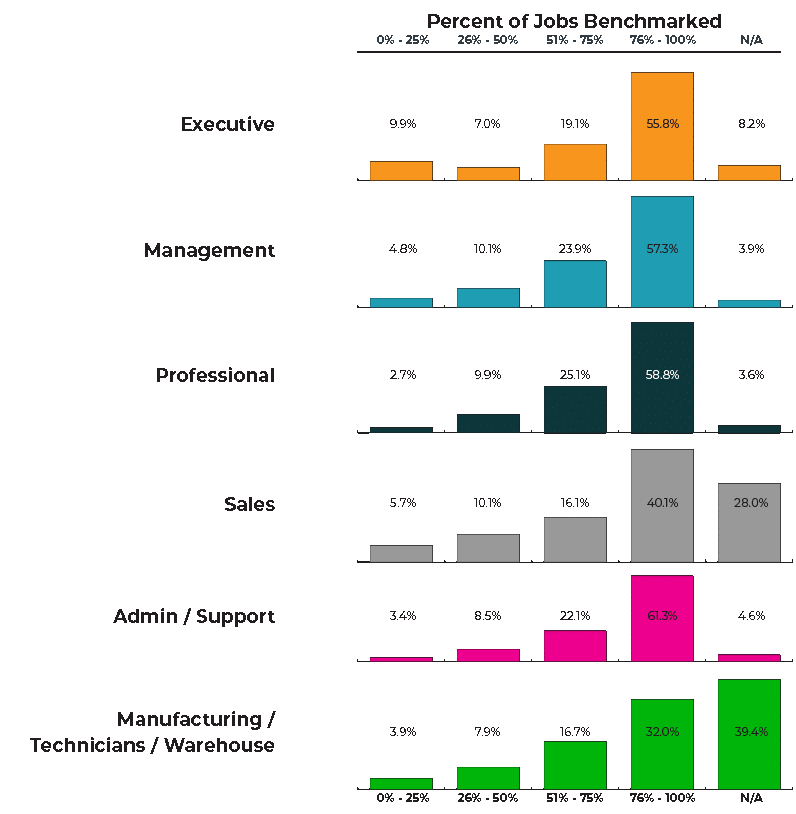
In executive, management, professional and admin and support roles, more than half of organizations (56 to 61 percent) directly match over 75 percent of their jobs to survey benchmark jobs. Sales and manufacturing roles are matched less often, partly because many organizations don’t have those roles.
Most of that work is done in house. With the exception of executive roles, internal compensation teams are responsible for benchmarking and evaluating roles in approximately 90 percent of the organizations surveyed where those roles exist. Only 52 percent of organizations require their compensation teams to benchmark executive-level roles; 38 percent have external consultants benchmark executive roles, and another 9 percent have a compensation committee carry out this responsibility.
Base pay is the most common element used for benchmarking
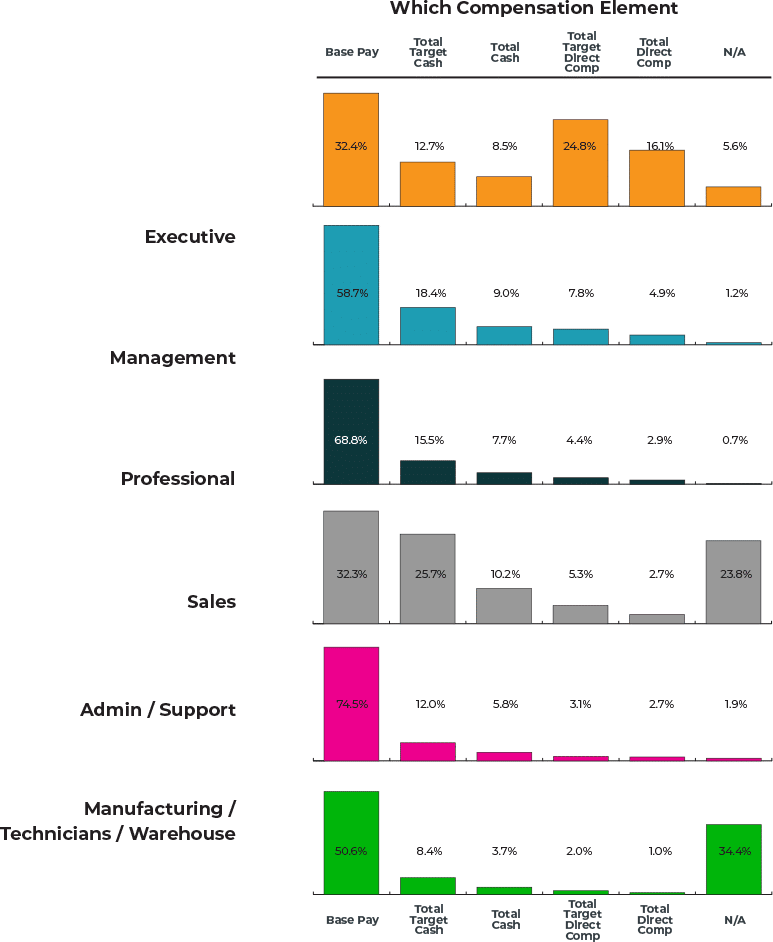
Base pay remains the primary compensation element companies use to benchmark their roles. It is generally the most available and consistent data in salary surveys, and most pay bands exclude variable pay, so it should be no surprise that most companies use it.
Executive pay is the exception: a significant portion of executives’ total compensation is variable, so companies are more likely to consider total target direct or total direct compensation when benchmarking executive roles. Sales also sees many companies using total target cash, again because of the significant portion of variable pay in sales jobs.
What else is in the full report
These are two of the findings. The full 19-page report has every chart from the survey, with results broken out by company size, from under 500 to more than 10,000 employees:
- Which salary survey data cuts companies use to define their labor market, by job level
- Organization-weighted versus incumbent-weighted data, and how many survey sources each match targets
- What analysts do when the right survey level can’t be found
- How often matches are audited, and standard turnaround times for job reviews
- How many salary surveys companies buy, their annual survey budgets and the most popular surveys
- Which market pricing software companies use, the features that matter most, what they pay and how satisfied they are
Get the full report free with the form at the top of this page.
Benchmark with your own surveys
See how CompTool prices whole job families with the surveys you already license.